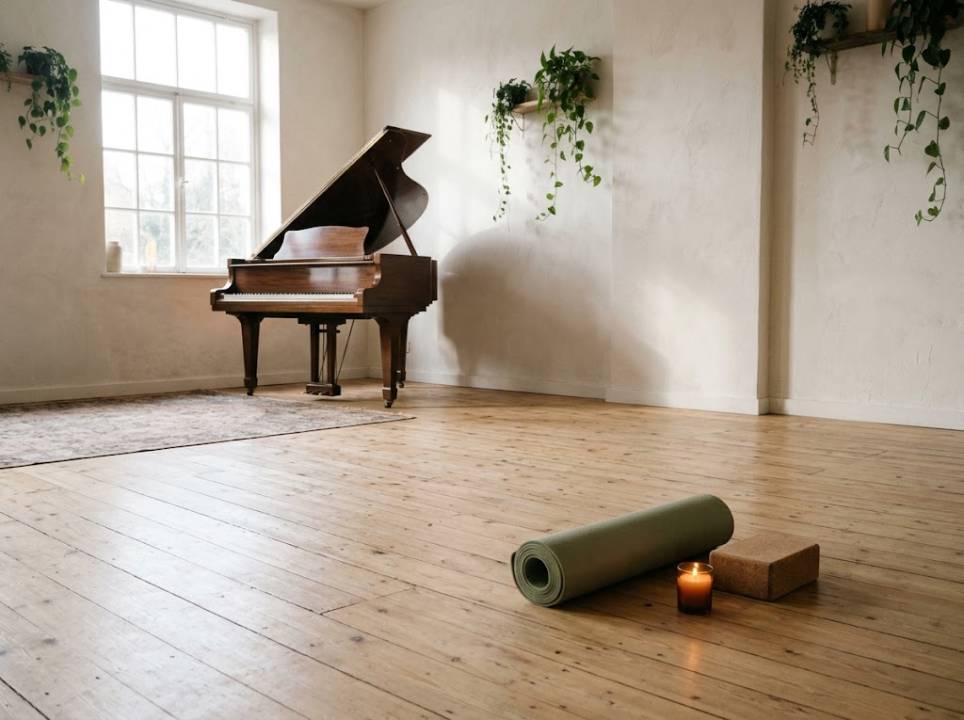
A good yoga class rarely depends on the poses alone. The sound in the room shapes how long people stay present, how deeply they breathe and how easily they let go of the day. Whether you teach, practise at home or simply want a quieter evening, the right music can change the whole experience.
Why sound matters in a yoga practice
Music gives the mind something gentle to follow. Without it, thoughts tend to wander to emails and errands. With a steady, unhurried piece in the background, attention settles on the breath and the body.
The best yoga music supports the practice without demanding attention. It should rise and fall slowly, avoid sharp changes in volume and leave space between the notes.
Piano music for meditation and relaxation
The piano suits meditation well. Its tone is warm, each note decays naturally and a single player can create long, quiet phrases that feel like breathing. Many teachers prefer solo piano over layered electronic sounds because it feels human and unforced.
Composers who also teach yoga bring a practical advantage. They know how long a pose lasts, when the room needs silence and how the energy of a class moves from effort to rest. That experience shows in the pacing of their pieces.
Matching music to the style of class
An energetic Ashtanga session asks for something different from a slow evening class. Dynamic styles can handle a steady pulse, while restorative classes work best with soft, open textures and almost no rhythm.
Start by listing the parts of your class: arrival, warm up, main sequence, cool down and final rest. Give each part a short note on the mood you want. Then choose tracks that fit those moods rather than building one long playlist.
Sharing music and teaching texts with a wider audience
Musicians and yoga teachers increasingly reach listeners abroad. A booklet, a CD cover or a class description written in one language can find an audience in another, provided the words travel well. Poland, for example, has a lively yoga community, and professional Polish translation services help artists present their releases, liner notes and course descriptions in a way local readers trust.
The same care applies to Sanskrit terms. Names of poses and philosophical ideas should be kept consistent, explained briefly and never replaced with loose approximations. A translator with experience in the subject will spot these details quickly.
Language and learning in the yoga world
Many teachers pick up a few words in other languages simply to welcome students from different countries. It shows respect and makes newcomers feel at ease. Learning does not have to be heavy: a greeting, a few anatomical terms and the names of the main poses go a long way.
If you are curious how far this can go, take a look at the list of the hardest languages to learn. It is a reminder that every language has its own rhythm, and that patience matters as much in study as it does on the mat.
Creating a calm space at home
You do not need a studio to enjoy a good practice. A corner with a mat, a folded blanket and a small speaker is enough. Keep the volume low, so that the music sits just above the sound of your breath.
Dim the lights, silence your phone and choose one album for the whole session. Familiar music works better than something new, because the mind stops analysing it and begins to rest.
Using music for sleep and stress relief
Slow instrumental pieces also help in the evening. Playing the same quiet album each night teaches the body to link the sound with winding down. Within a few weeks, many people notice that they fall asleep faster and wake with less tension.
Try a short routine: five minutes of gentle stretching, five minutes of slow breathing and one full track of quiet piano. Keep the order the same and the habit will build itself.
How to choose recordings you will keep
Listen to a sample before you buy. Check the sound quality, the length of the pieces and whether the album stays calm from start to finish. Recordings with sudden loud passages can pull people out of a meditative state.
Support independent composers when you can. Buying a CD or a download directly from the artist helps them keep making music for classes and for home practice.
Building a simple listening routine
Consistency matters more than variety. Pick two or three albums that suit different moods, such as one for morning energy, one for midday focus and one for the evening. Rotate them through the week and notice how your body begins to respond before the first note has finished.
Keep a short note of what works. A single line after each session about the track, the volume and how you felt is enough. After a month you will see clear patterns and know exactly what to play for a calm start or a deep finish.
Where to read more about yoga
The history of the practice is long and varied, and a good overview can add depth to any class. A general reference such as the Yoga entry on Wikipedia explains the origins, the main traditions and the way the discipline spread across the world.
In short, quiet piano, clear language and a calm space make a practice more enjoyable. Choose music with care, share it with respect for other languages, and let the sound support the stillness you came for.