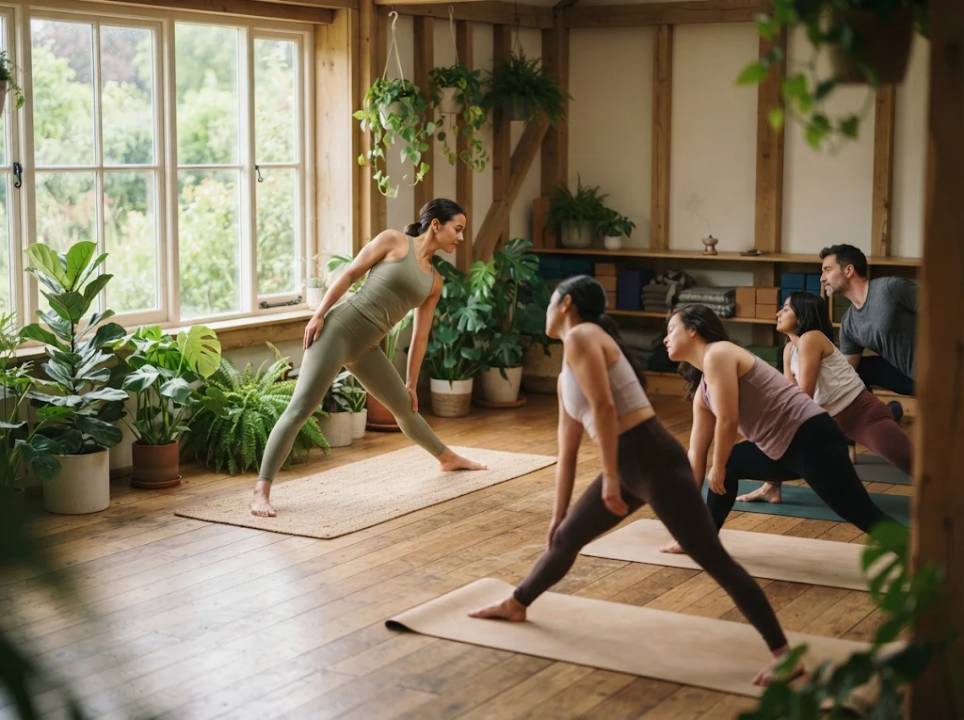
Many people want to start yoga but worry that they are not flexible, not fit or not free enough in their schedules. A gentle practice built around short sessions solves these problems. It needs no special equipment, no perfect body and no hour of silence. This article, written from the viewpoint of a teacher who works with busy adults, explains how to begin, what a simple routine looks like, how to breathe, how to avoid injury and how to keep the habit. It also touches on teaching online and in several languages, which has opened yoga to many more students.
Yoga Is Not About Flexibility
A common myth says that you must touch your toes before you start. In reality, yoga is a practice of attention, breath and movement, and flexibility comes later. A beginner who moves slowly and listens to the body gains more than someone who forces a pose.
The goal of each session is to feel a little calmer and a little more at home in your body, not to look like a picture.
What You Need to Start
A mat, comfortable clothes and a quiet corner are enough. A folded blanket, a cushion and a strap can help. Practice on an empty stomach or two hours after a meal. Choose a time that you can protect, such as ten minutes after waking.
If you have health conditions, pregnancy or injuries, talk to a doctor and a qualified teacher first.
A Ten Minute Routine
Begin seated with a few deep breaths. Move through cat and cow poses to warm the spine, then child's pose to rest. Add a gentle forward fold, a low lunge on each side and a supine twist. End lying down for a minute of silence. Each pose can last five slow breaths.
Repeat this routine four or five times a week, and notice how your body feels after two weeks.
Breathing Matters
Slow breathing through the nose calms the nervous system. Try inhaling for four counts and exhaling for six. Keep the shoulders relaxed and let the belly move. If you feel dizzy, return to normal breathing.
Breathing exercises are also useful during the day, before meetings or when you feel tense.
Avoid Injury
Move slowly, never push into pain and keep knees aligned with toes. Use props to support the body, and rest when needed. A good teacher gives options for each pose and explains how to adapt it. Qualified instructors often register with organizations such as the Yoga Alliance, which sets standards for training.
Pain is a signal to stop and adjust, not a challenge to overcome.
Learning Online
Online classes let you practice at home with expert guidance. Choose a teacher whose style suits you, and check that the camera shows the whole body. Teachers who record sessions need clear audio and often add captions or transcripts. Our guide on audio and video transcription explains how to prepare recordings for subtitles and notes.
Practice with the camera on at first, so the teacher can offer corrections.
Teaching in Several Languages
Yoga has reached students all over the world, and many want instructions in their own language. Teachers who welcome students from Eastern Europe may need ukrainian translation services for class descriptions, health forms and policies. Simple, calm language and consistent terms for poses make translation easier and keep instructions safe.
Sanskrit names can be kept, with explanations in the local language.
Build the Habit
Link practice to an existing habit, such as brushing teeth or making coffee. Track sessions on a calendar, and reward yourself with small pleasures. If you miss a day, simply restart without guilt. Practice with a friend or join a class to stay motivated.
Regularity matters more than the length of any single session.
Yoga for Desk Workers
Long hours at a screen tighten the neck, shoulders, hips and wrists. Short breaks with shoulder rolls, neck stretches, seated twists and standing forward folds ease tension. Set a reminder every hour, stand up and move for a minute. Adjust your chair and monitor to support a neutral spine. These small habits prevent pain and improve concentration during the working day.
A few mindful minutes can reset your energy better than another cup of coffee.
Rest and Relaxation
Relaxation is a central part of practice. Lie on your back with legs supported, cover yourself with a blanket and follow your breath. Guided relaxations help many people sleep better. Do not skip the final rest, because this is when the body absorbs the benefits of the session.
Evening practice with soft light can become a calming ritual.
Choosing a Teacher
Look for a teacher who listens, explains clearly, offers modifications and respects your limits. Try a few classes before committing, and trust your feelings. A good teacher creates a safe space for every body and every level.
Ask about training, experience and the style of class before you book.
Yoga and Sleep
Gentle evening practice can prepare the body for sleep. Try slow stretches, a supported forward fold, legs resting up a wall and a few minutes of slow breathing. Keep the room dim and avoid screens afterward. Many students report that they fall asleep faster when they follow this routine regularly.
If sleep problems continue, speak with a doctor.
Props That Make Practice Easier
Blocks, straps, blankets and bolsters help you find comfortable alignment. A rolled towel can replace a bolster, and a belt can replace a strap. Props are not a sign of weakness, they are tools used by experienced teachers and students too.
Experiment with different supports to learn what helps your body.
Yoga Beyond the Mat
The values of yoga, such as patience, honesty and non harming, can guide daily choices. Practice listening before replying, take a slow walk instead of rushing and notice your breath during stressful moments. Small acts of attention add up.
The mat is only the training ground for everyday life.
Common Questions From Beginners
People often ask how often to practice, whether they need to be vegetarian, how to choose a style and what to wear. Practice a few times a week, eat what suits you, start with gentle or beginner classes and wear clothes that allow free movement.
There are no strict rules, only guidance for finding what works for you.
Posture and Alignment Basics
Stand with feet hip width apart, spread the toes, lengthen the spine and relax the shoulders. In seated poses, lift the chest and keep the neck long. Small adjustments, like bending the knees or placing a cushion under the hips, make poses safer and more comfortable.
Ask your teacher to check your alignment in the first classes.